How to Appoint a Data Protection Officer (DPO)
Do You Need a DPO?
- Process large-scale personal data
- Process sensitive data (health, financial, biometric)
- Your business model centers on data processing
Option 1: In-House DPO
Qualifications:
- Strong DPDP/GDPR understanding
- Legal or compliance background preferred
- Data governance experience
Responsibilities:
- Monitor compliance across organization
- Handle data subject rights requests
- Conduct data impact assessments
- Train staff on data protection
- Audit third-party processors
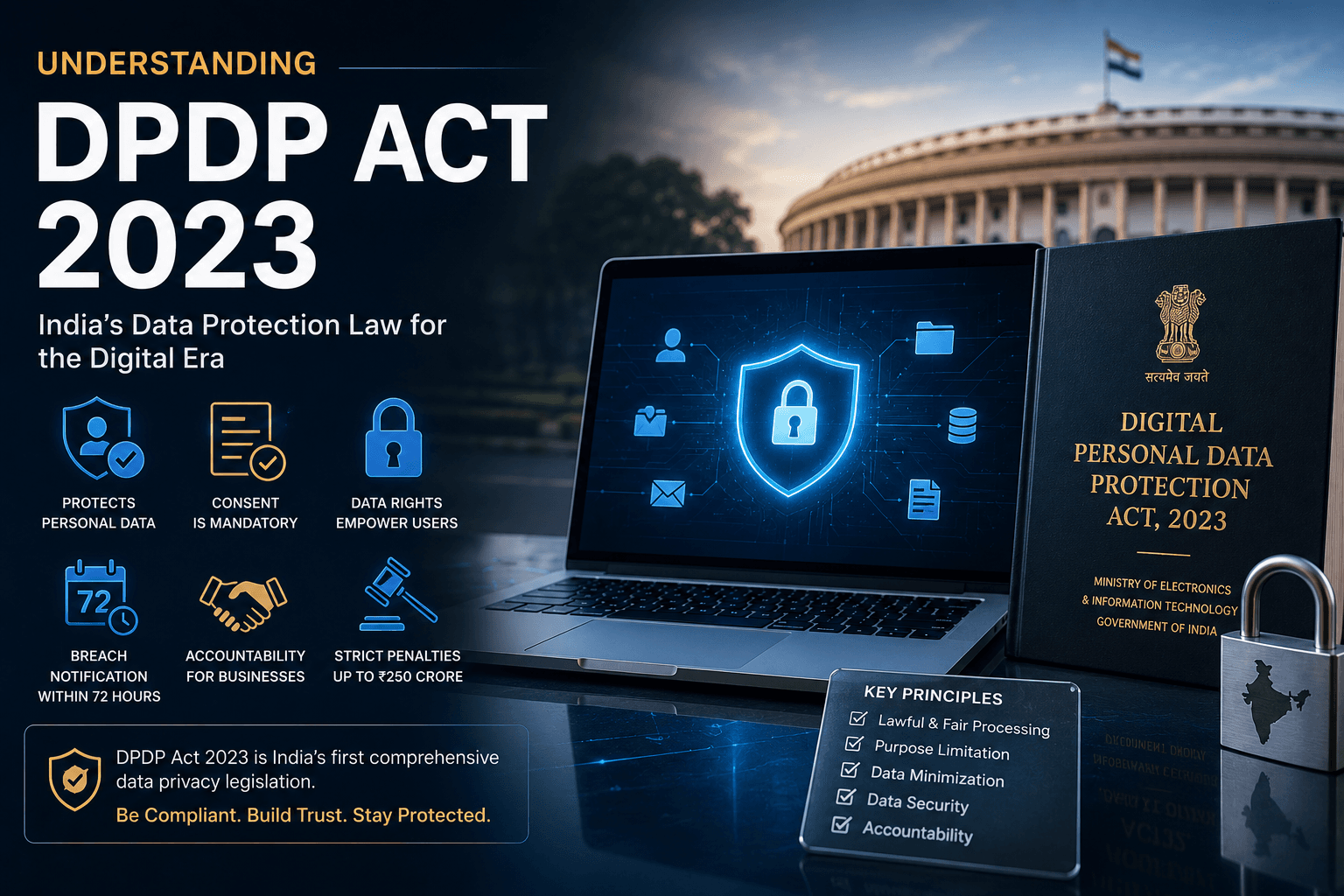
- Coordinate breach response what is dpdp act 2023
Option 2: Outsourced DPO-as-a-Service
Advantages:
- No permanent hiring
- Cost-effective for SMBs
- Access to expert guidance
- Cost: typically ₹5L-50L annually
Documentation Required
- Board resolution appointing DPO
- DPO job description or service agreement
- DPO contact information
- DPO reporting structure (reports to CTO/CEO)
- Audit trail of DPO actions
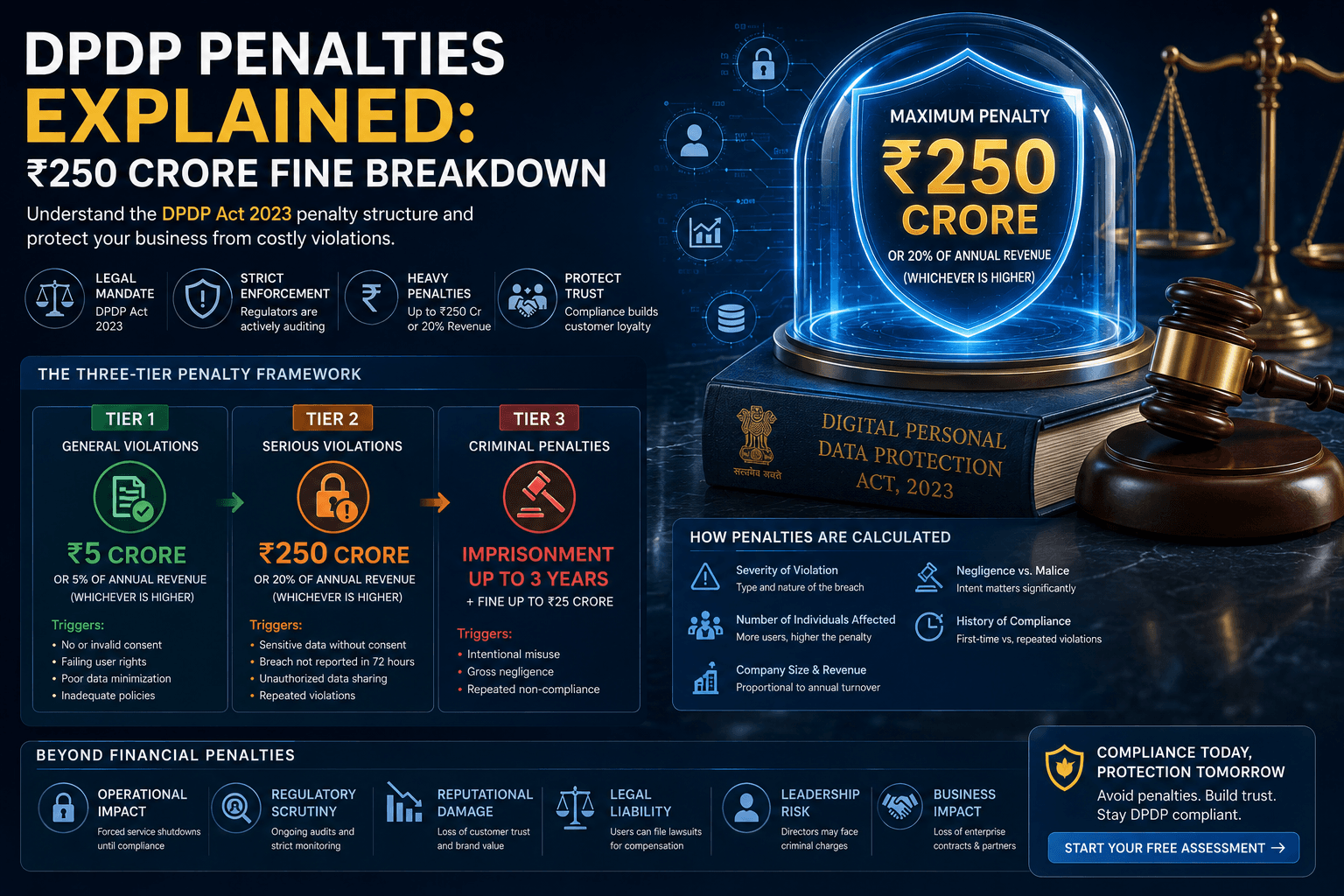
Disclaimer: General informational article. Consult legal experts. dpdp penalties explained
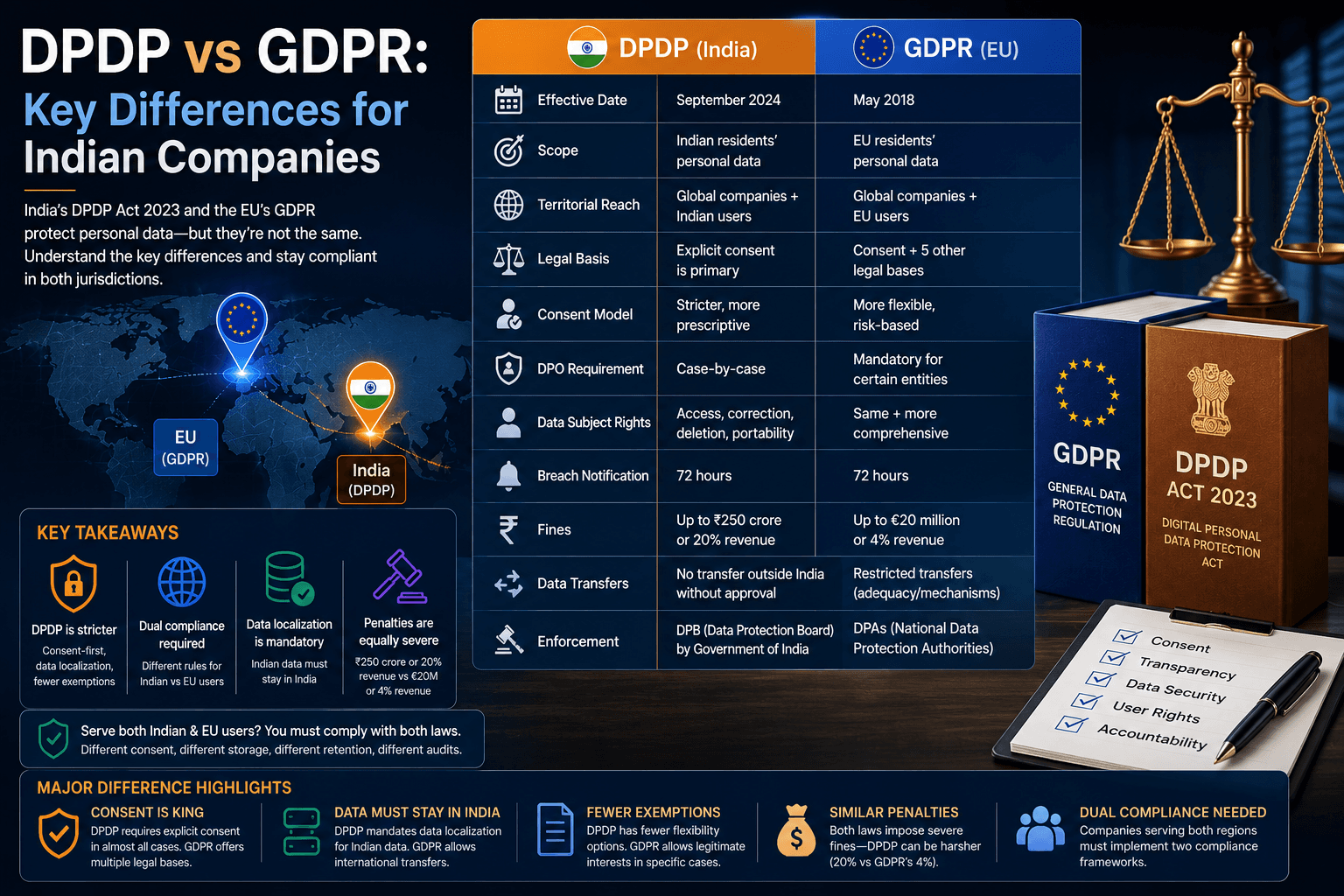
Get Help: Start your free DPDP compliance assessment dpdp vs gdpr DPDP Compliance Hub