Quick Answer: India has a large and fast-growing field of AI voice agent builders, from Indian-language speech specialists and developer platforms to IT services firms and funded startups. The right partner depends less on brand size and more on three things: live voice deployments in your language mix, clean integration with your CRM and telephony, and clear ownership of compliance and data. Start with a scoped AI voice agent project, then compare vendors with live call evidence.
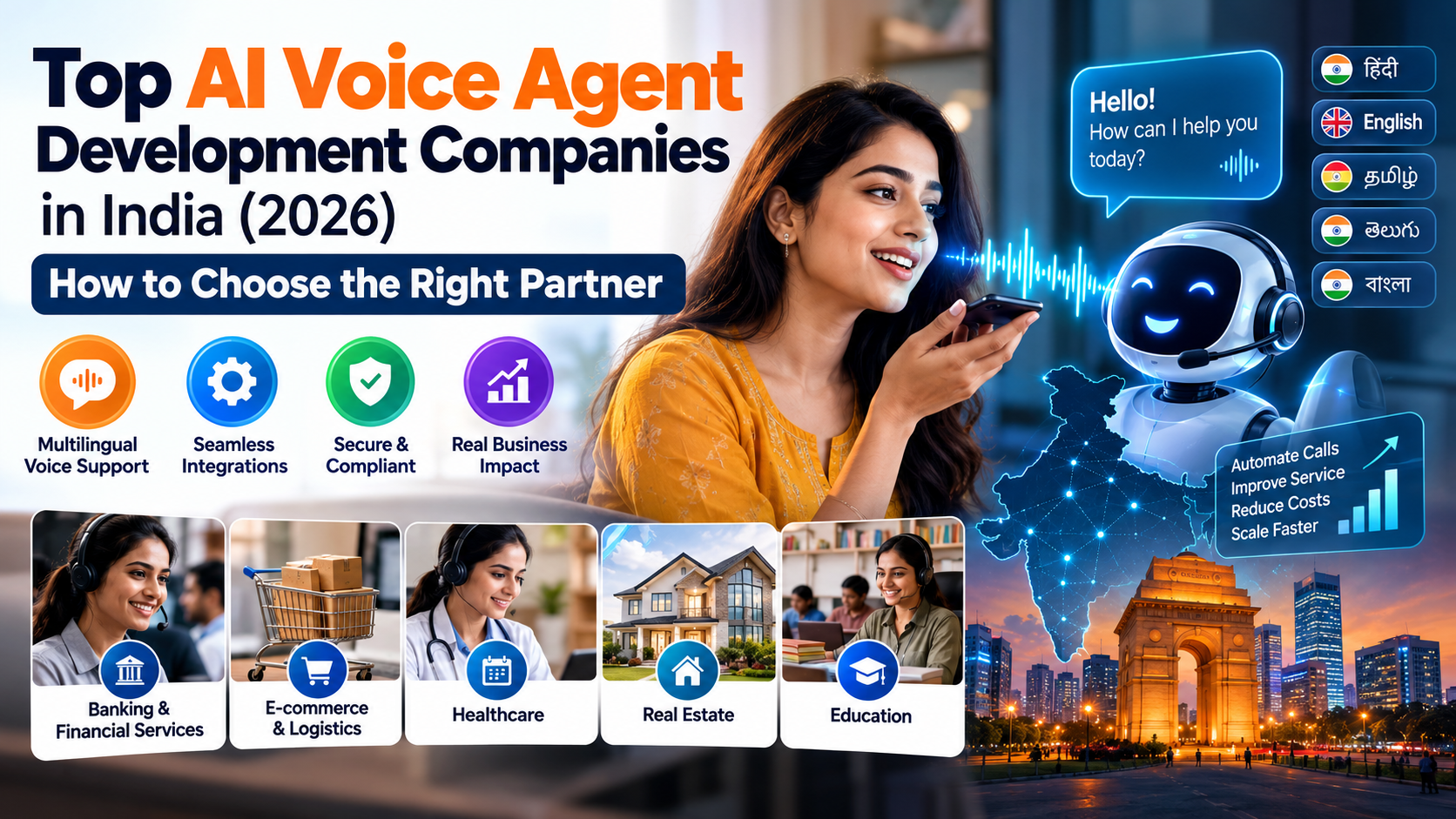
Indian businesses use voice agents for lead qualification, appointment scheduling, payment reminders, order support, and after-hours customer service. Many customers prefer to speak Hindi, Tamil, Telugu, Bengali, or English, often within the same call. That makes language support a core requirement, not an add-on. A good voice agent must also hand off smoothly to a human when a case is complex or sensitive. Companies that want more than a phone bot often combine voice with broader AI agent development.
This guide covers the market data and what the numbers mean, the vendor landscape, how a voice agent is built, a shortlist to evaluate, the questions that separate proven partners from demo-only vendors, and a practical plan for a first project.
Key takeaways
- India's market estimates vary widely. Ken Research projects the India Conversational AI Market to grow from USD 575 million in 2025 to USD 2,345 million by 2031, a 26.40% CAGR, with voice AI agents among the strongest growth areas. Other firms use different definitions, so compare scope before you quote any figure.
- The contact centre is the core buyer. Wisemonk Research's 2026 India CX report puts India's third-party call and contact centre outsourcing market at USD 3.86 billion in 2024, forecast to reach USD 9.04 billion by 2030. The same report says contact centre technology is growing two to three times faster than outsourcing services.
- The startup landscape is broad. Tracxn's October 2026 list tracks 30 voice AI startups in India, 17 of them funded. Its first entries include Verloop.io, Gnani, Navana, Ringg AI, and Murf.
- Most rankings are vendor-written. Many "top company" lists are published by the firms they rank. Use them to build a longlist, then verify each claim yourself.
What the market numbers really mean
Before you use any market figure in a plan or a presentation, check what it measures. Three questions matter most.
Does it include IVR? Traditional interactive voice response systems follow fixed menus and key presses. Some reports count them as voice AI, others do not. A figure that includes IVR will look much larger than one covering conversational voice agents.
Does it count software, services, or both? Some estimates cover platform licences only. Others add implementation, integration, and managed operations. Services often make up a large share of spend in the first year.
Is the figure licence-based or minute-based? Pricing models differ. Some vendors charge per seat or per agent, while others charge per minute of call time. These models lead to different cost curves as call volumes grow.
Because of these differences, a range is more honest than a single number. For planning, the more useful question is what your own call volume, language mix, and cost per call look like today.
Why Indian businesses are adopting voice agents
Voice remains the default channel for many Indian customers. People call to book a service, check an order, pay a bill, or ask about a loan. When the phone goes unanswered, the lead or the payment is often lost. A voice agent can answer immediately, collect details, and complete routine steps.
Three conditions make India a strong market. The first is language diversity. A voice agent that handles only English misses a large share of callers, and code-switching between a regional language and English is common in everyday speech. The second is scale. Contact centres handle very high call volumes, and repetitive calls are a good fit for automation. The third is cost pressure. Businesses want faster response times without adding headcount for every peak, such as a festive sale, a tax deadline, or an admission window.
Sectors that often start with voice agents include:
- Banking, financial services, and insurance: payment reminders, policy renewals, and document collection
- E-commerce and logistics: order status, delivery confirmation, and return requests
- Healthcare: appointment booking, reminders, and follow-up calls that do not involve clinical advice
- Real estate: lead qualification, site visit booking, and follow-up after enquiries
- Education: admission enquiries, fee reminders, and counselling appointments
These benefits depend on design. The agent should have a narrow job, clear limits, and a tested handoff. A lending firm, for example, may use an agent for payment reminders and document collection, but leave hardship cases and disputes to trained staff.
The vendor landscape
Indian vendors fall into a few groups. Knowing the group helps you set the right expectations.
- Speech and language model labs. Companies such as Sarvam AI focus on Indic speech and language models. They are useful when voice quality in Indian languages is the main concern. Some businesses build their own agents on top of these models.
- Developer-first platforms. Bolna is one example of a platform that lets engineering teams build, test, and run voice agents. It suits teams with in-house developers who want control over prompts and workflows.
- Enterprise conversational AI vendors. Companies such as Gnani.ai and Verloop.io offer voice and chat automation for larger organizations, often with banking or customer support references.
- Fast-deployment startups. Ringg AI and similar firms focus on getting an agent live quickly. Confirm the scope of the first deployment and the post-launch support model.
- IT services firms. Firms such as Trigma and the larger technology services companies combine voice agents with systems integration, CRM work, and managed operations.
No single group is best for every project. A bank with strict controls may need an enterprise vendor and a long pilot. A growing service business may do better with a platform and a small internal team.
How a voice agent is built
Understanding the building blocks makes vendor conversations clearer. A typical voice agent has five parts:
- Telephony. The system that receives and places calls, such as a cloud telephony provider or a SIP connection.
- Speech recognition. Converts the caller's speech to text. Accuracy depends on the language, accent, and background noise.
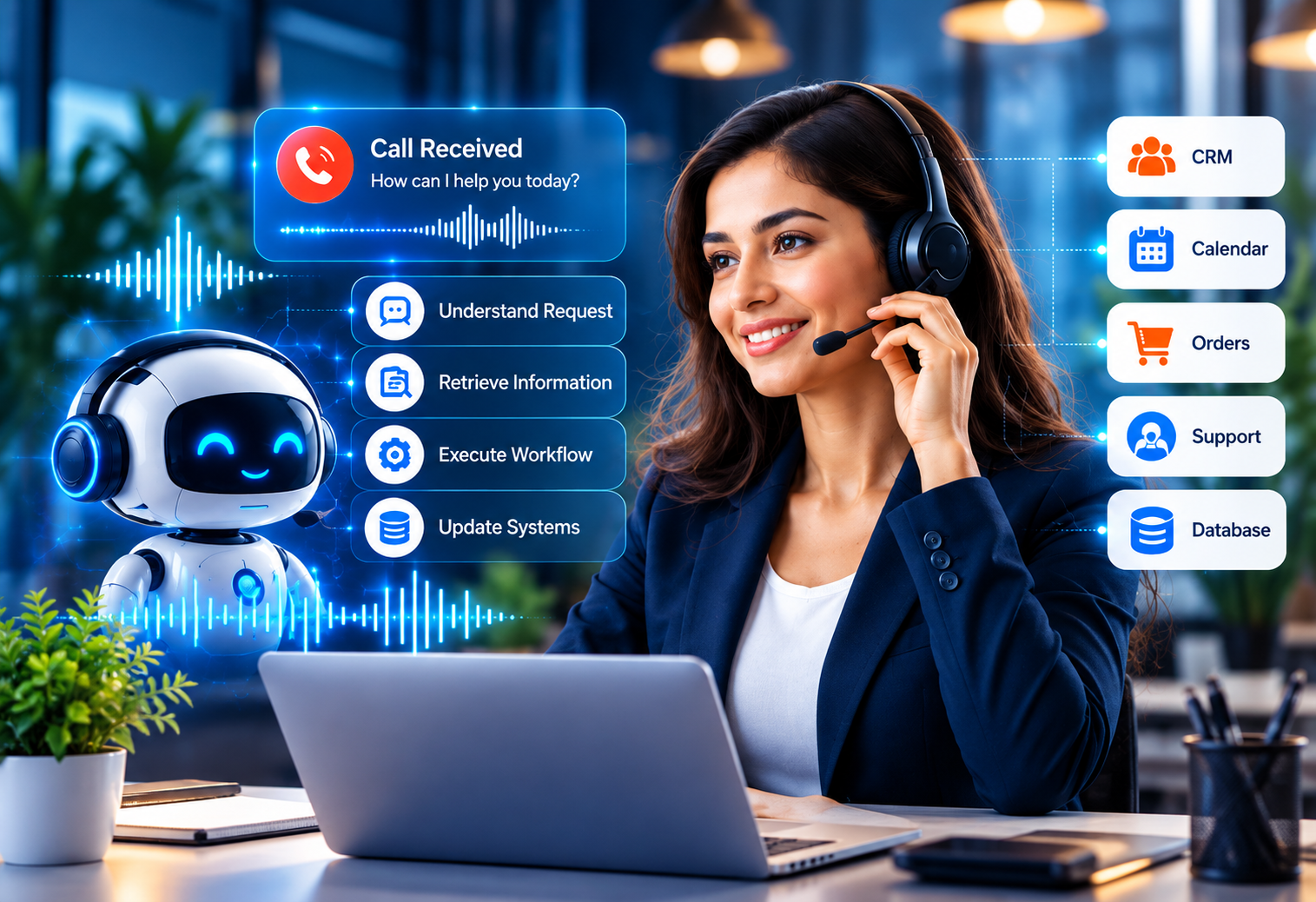
- Language understanding and reasoning. Interprets the request, decides the next step, and calls approved tools, such as a booking system or a CRM lookup.
- Speech synthesis. Converts the response to natural-sounding speech. Voice quality and pronunciation of local names matter here.
- Handoff and logging. Transfers the call to a person with a summary, and records the transcript and outcome for review.
Each part adds delay. Response time, often called latency, is one of the first things callers notice. A vendor should measure latency on real calls, not only in a demo room.
How to evaluate an AI voice agent partner
Use this checklist for every vendor on your shortlist.
- Live deployments. Ask for production examples, call volumes, and whether the client still uses the system after the first year.
- Indian-language performance. Test your own scripts in each language, including code-switching between Hindi or a regional language and English.
- Accent and noise handling. Call the agent from different networks and locations, and test with background noise.
- Latency and interruptions. The agent should respond quickly and stop speaking when the caller interrupts.
- Human handoff. Confirm how the call transfers, what summary the agent passes on, and how escalation rules are tested.
- Integrations. Confirm connections to your CRM, telephony provider, calendar, and help desk, and who maintains them after launch.
- Data protection. Ask where recordings and transcripts are stored, who can access them, and how retention and deletion work. Confirm how the vendor meets India's Digital Personal Data Protection Act, 2023, and any sector rules that apply to you.
- Operations after launch. Ask how prompts, models, and workflows are updated, and what support is included.
Red flags to watch for: a demo that is not a live call, no reference clients you can speak to, a vendor that cannot explain its handoff rules, unclear data storage locations, and a quote that excludes integration work.
Companies to evaluate
The table below lists firms that recent India-focused guides and directories mention. Descriptions come from those sources, not from our own testing. Treat them as a starting longlist.
| Company | Stated focus (per source) | What to verify |
|---|---|---|
| Bolna | Developer-first voice automation platform | Suits teams that want to build and manage their own agents. Ask about support depth. |
| Sarvam AI | Indic speech and language models | Test the Indian-language voice quality on your own call scripts. |
| Gnani.ai | Enterprise voice deployments, including banking | Ask for references in regulated industries and call-volume data. |
| Ringg AI | Fast time-to-market for voice agents | Confirm integration scope and the post-launch support model. |
| Trigma | IT services firm connecting agents to CRM and scheduling systems | Its ranking comes from its own listing. Ask for client references. |
| Verloop.io | Conversational AI for customer support | Check voice capability separately from chat, since many platforms cover both. |
Other names that appear in these lists include Navana, Murf, Yellow.ai, Kore.ai, and Tata Consultancy Services. Some firms report certifications such as ISO 27001 or CMMI. Confirm any certification with the issuing body before you rely on it.
Disclosure: This article is published by Cor Advance Solutions, which offers AI voice agent development. We do not rank competitors. The table reports what other sources say about each firm. Use the checklist above to compare any partner, including us.
Cost and return on investment
Voice agent costs have three main parts: the platform or licence, the integration and build work, and the ongoing operations, including monitoring, prompt updates, and quality reviews. A quote that shows only the platform fee usually leaves out the largest costs.
To judge return, compare the cost per handled call with the cost of a human-handled call. Two rates drive the result:
- Containment rate: the share of calls the agent completes without a human.
- Handoff quality: whether the calls that move to a person arrive with enough context to resolve quickly.
A high containment rate is not always good. If the agent ends calls early to hit a target, customers will call back, and the total cost rises. Track repeat calls and caller satisfaction alongside containment.
Ask every vendor to model costs at three call volumes: your current volume, a peak month, and a volume two years from now. This shows where per-minute or per-seat pricing becomes expensive.
Common mistakes to avoid
- Starting with the widest use case. A voice agent that tries to handle every call type usually handles none well. Start with one flow.
- Testing only in English. Many failures appear only in mixed-language or regional-language calls.
- Ignoring the handoff. A caller who is transferred without context becomes frustrated quickly.
- Measuring only cost savings. Watch caller experience, repeat calls, and compliance issues too.
- Skipping the data plan. Decide retention and access rules before the first call is recorded, not after.
- Leaving no owner after launch. Someone must review call quality and update prompts every week.
What a strong first project looks like
Start with one call type that has clear steps and measurable results, such as payment reminders, appointment confirmations, or inbound lead qualification. Define success measures before launch, including the share of calls completed without a human, the handoff rate, average response time, and caller feedback.
A practical plan has four stages:
- Scope. Map the call flow, the systems it touches, the approved actions, and the cases that must go to a person.
- Build and test. Create the agent, connect the systems, and test with your own scripts in each language, including noisy and interrupted calls.
- Pilot. Run the agent on a limited share of calls for several weeks, and review failed calls every week. Fix causes such as unclear prompts, missing data, or weak handoff rules.
- Expand. Add call types or languages only after the first flow is stable and meets the targets you set.
Our AI voice agent development services cover scoping, language testing, integration, and handoff design for projects like this. Our team can also help you compare vendor proposals against the checklist in this article.
Questions to ask every vendor
- Can you show a recorded call in each language we need?
- What is your measured handoff rate, and how do you handle failed calls?
- Which integrations are included, and which are extra work?
- Where are recordings stored, and who can access them?
- How do you meet India's data protection requirements for call recordings?
- What happens after launch, and who maintains the prompts and workflows?
- How does your pricing change if call volume doubles?
- What results should we expect in the first 30 days, and how will you report them?
Frequently asked questions
Who are the top AI voice agent development companies in India? Recent lists include Bolna, Sarvam AI, Gnani.ai, Ringg AI, Trigma, and Verloop.io, among others. Most lists are written by the companies they rank. Shortlist by checking live deployments, Indian-language quality, and integration with your systems.
Can an AI voice agent speak Hindi and regional languages? Many modern voice agents support Hindi and several regional languages, and quality varies by vendor. Test the agent with your own scripts, including mixed-language calls, before you commit.
How is an AI voice agent different from an IVR? An IVR follows fixed menus and key presses. A voice agent understands natural speech, handles more varied requests, and can complete tasks such as booking or payment reminders, then hand off when needed.
Is it safe to use AI voice agents with customer data in India? It can be, with the right design. Confirm where data is stored, who can access recordings, how long they are kept, and how the vendor follows India's Digital Personal Data Protection Act, 2023, along with any sector rules that apply to your business.
What is the size of India's conversational AI market? Ken Research projects USD 575 million in 2025, rising to USD 2,345 million by 2031. Other firms publish different figures because they define the market differently, so check the scope before comparing.
How long does a first voice agent project take? The timeline depends on the number of call flows, integrations, and languages. A single flow with one or two integrations is much simpler than a multi-language program across several systems. Scope the first flow before estimating a timeline.