DPDP Compliance

DPDP Compliance Timeline & Checklist for 2026

Cor Advance Solutions
July 11, 2026
16 min read
DPDP Compliance Timeline & Checklist for 2026

DPDP Compliance Timeline & Checklist for 2026

DPDP is active now. Here's your roadmap to compliance by end of 2026. what is dpdp act 2023

Phase 1: Immediate Actions (By End of July 2026)

Week 1-2: Audit & Assessment

  • Inventory personal data: Where do you collect it? How much? What types?
  • List third parties: Who processes your data? (cloud, CRM, analytics, payment)
  • Identify sensitive data: Do you process health, financial, or biometric data?
  • Audit retention: How long do you keep data? Is it documented?
  • Review systems: Where is data stored? Is it encrypted?
  • Assess compliance: Which DPDP requirements are you already meeting?

Deliverable: Compliance audit report identifying gaps

Week 3-4: Policy Development

  • Revise Privacy Policy: Clear, granular consent language for all data types
  • Create Consent Forms: DPDP-compliant consent before data collection
  • Document Data Flows: Process diagrams showing data collection, storage, usage
  • Define Retention Schedules: How long each data category is kept
  • Create Data Classification: Which data is sensitive? Which is personal?
  • Draft DPA Templates: For third-party vendors/processors

Deliverable: Updated policies and templates

Phase 2: Q3 2026 (July-September)

Technical Implementation

  • Implement Encryption: At-rest and in-transit encryption for all personal data
  • Set up Secure Deletion: Automated deletion of data after retention period
  • Audit Access Controls: Who can access personal data? Log all access.
  • Enable Data Portability: Users can download their data in standard formats
  • Implement Right to Delete: Users can request deletion; you can fulfill within 30 days
  • Create Breach Response Plan: 72-hour notification protocol
  • Set up Audit Logs: Track all data processing activities

Deliverable: Compliant data systems ready for audit

Vendor Management

  • Audit all third parties: Do they comply with DPDP?
  • Negotiate DPAs: Signed Data Processor Agreements with each vendor
  • Verify sub-processors: Any sub-contractors of your vendors?
  • Map data flows: Document which vendor processes what data
  • Establish SLAs: Security and compliance requirements in contracts

Deliverable: Compliant vendor ecosystem

Organizational Changes

  • Appoint DPO: Or hire DPO-as-a-Service provider
  • Establish Data Governance Committee: Cross-functional team for compliance
  • Assign Data Stewards: Per department, responsible for their data
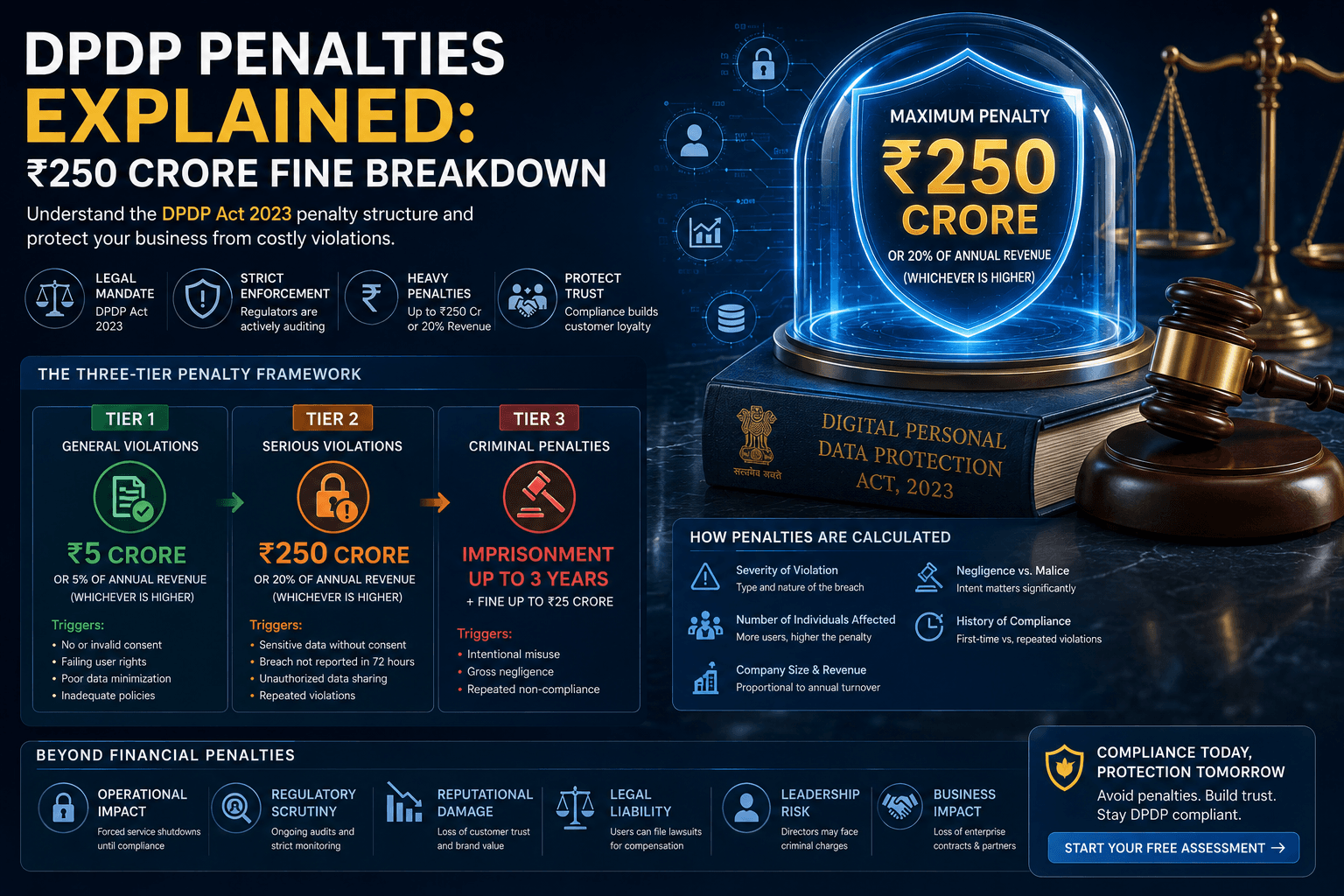
  • Create Escalation Process: Report issues quickly dpdp penalties explained

Deliverable: Clear organizational responsibility

Phase 3: Q4 2026 (October-December)

Training & Awareness

  • Staff Training: All employees understand DPDP and their role
  • Leadership Briefing: Board understands compliance obligations
  • Customer Communication: Explain how you protect their data
  • Vendor Training: Ensure processors understand DPDP requirements

Deliverable: Trained, compliance-conscious organization

Testing & Verification

  • Simulate Breach: Test your 72-hour notification process
  • Test Data Rights: Verify users can access/delete data
  • Audit Third Parties: On-site or remote audit of critical processors
  • Penetration Testing: Test security of data systems
  • Documentation Review: Are all activities documented for audits?

Deliverable: Verified compliance readiness

Continuous Monitoring

  • Establish KPIs: Consent rates, breach response time, audit completion rate
  • Quarterly Audits: Internal audits of compliance status
  • Annual Vendor Audit: Verify third parties maintain compliance
  • Stay Updated: Monitor DPDP guidance from DPB

Deliverable: Ongoing compliance framework

Detailed Compliance Checklist

Data Collection

  • Explicit consent obtained before collection?
  • Consent documents available?
  • Purpose of collection documented?
  • Data minimization applied (collecting only necessary data)?
  • Sensitive data labeled and tracked separately?
  • Non-Indian user data separated from Indian data?

Data Processing

  • Processing aligned with stated purpose?
  • Data retention timeline defined?
  • Access controls documented?
  • Authorized personnel only have access?
  • Processing logged for audit?
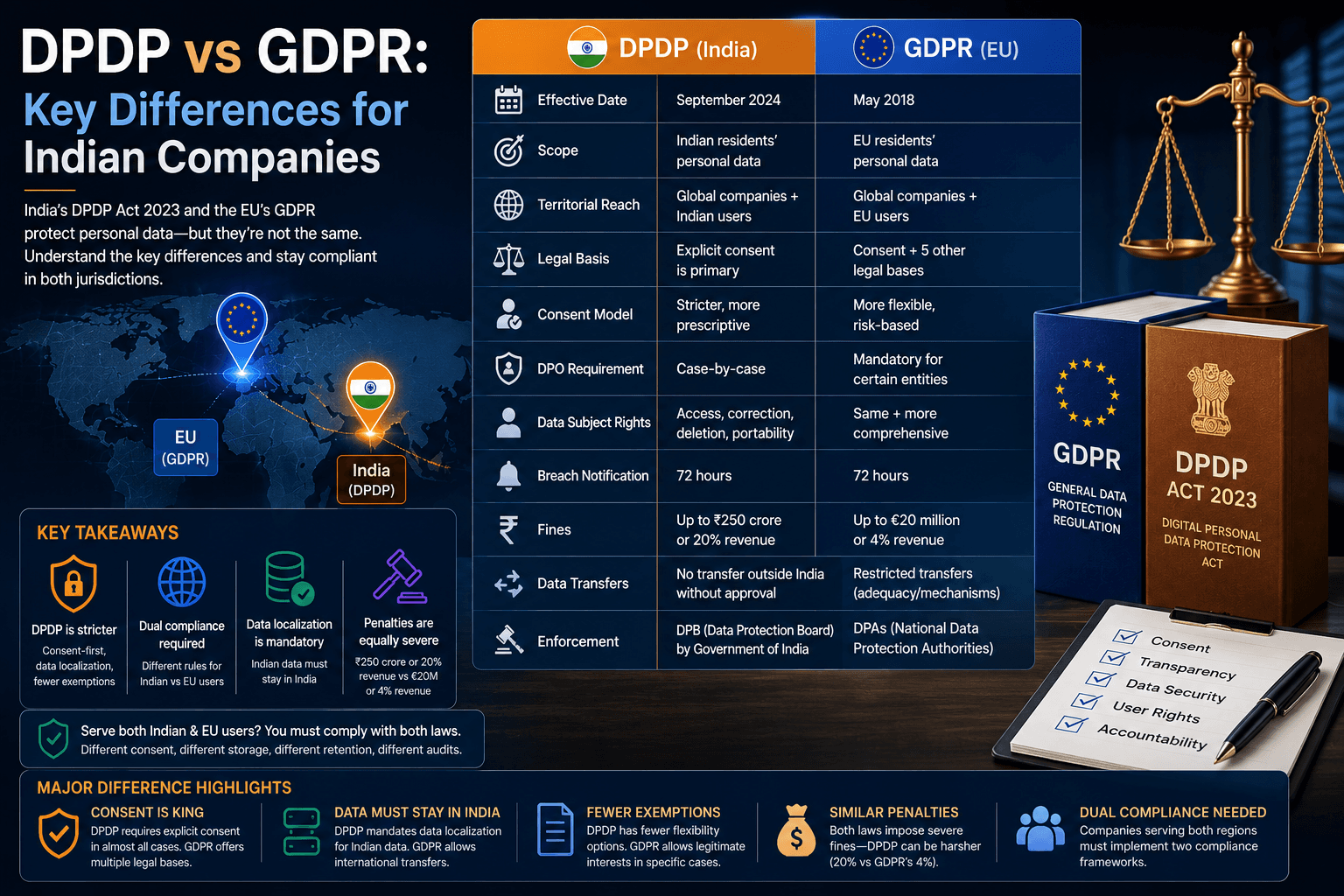
  • Third parties have Data Processor Agreements? dpdp vs gdpr

Data Security

  • Encryption applied (at-rest and in-transit)?
  • Passwords salted and hashed (for credentials)?
  • Multi-factor authentication enabled for admin access?
  • Regular security updates installed?
  • Vulnerability assessments completed?
  • Security audit by third party planned?

User Rights

  • Data access requests handled within 30 days?
  • Correction requests processed?
  • Deletion requests fulfilled within 30 days?
  • Portability format (CSV, JSON) available?
  • Grievance escalation process documented?
  • Response templates prepared?

Breach Management

  • Breach notification process documented?
  • 72-hour notification timeline tracked?
  • Notification template drafted?
  • Breach investigation procedure established?
  • Incident response team identified?
  • Cyber insurance in place?

Documentation

  • Privacy policy updated for DPDP?
  • Consent forms drafted?
  • Data flow diagrams created?
  • Retention schedules documented?
  • DPA templates finalized?
  • Processing activity records maintained?

Organizational

  • DPO appointed or outsourced?
  • Board governance updated?
  • Budget allocated for compliance?
  • Compliance dashboard created?
  • Audit schedule planned?
  • Incident response plan tested? DPDP Compliance Hub

Timeline at a Glance

July 2026: Audit & Assessment, Policy Development

August-Sept: Technical Implementation, Vendor Management, Organizational Changes

October-Dec: Training, Testing, Ongoing Monitoring

2027+: Continuous Compliance

FAQs

Q: What if we're already non-compliant? A: Act immediately. Undiscovered non-compliance is better than willful violation.

Q: Do we need outside help? A: For most companies, yes. DPO-as-a-Service, compliance consulting, and legal review are recommended.

Q: Can we delay compliance? A: No. DPDP is active now. Delayed action increases risk.


Disclaimer: This article is for general informational purposes only and does not constitute legal advice.

Get Started Today: Start your free DPDP compliance assessment

Share this article
Cor Advance Solutions

Ready to Transform Your Business?

Let's discuss how these insights apply to your specific challenges.

Get in Touch