DPDP Compliance
DPDP Penalties Explained: ₹250 Crore Fine Breakdown
12 min read
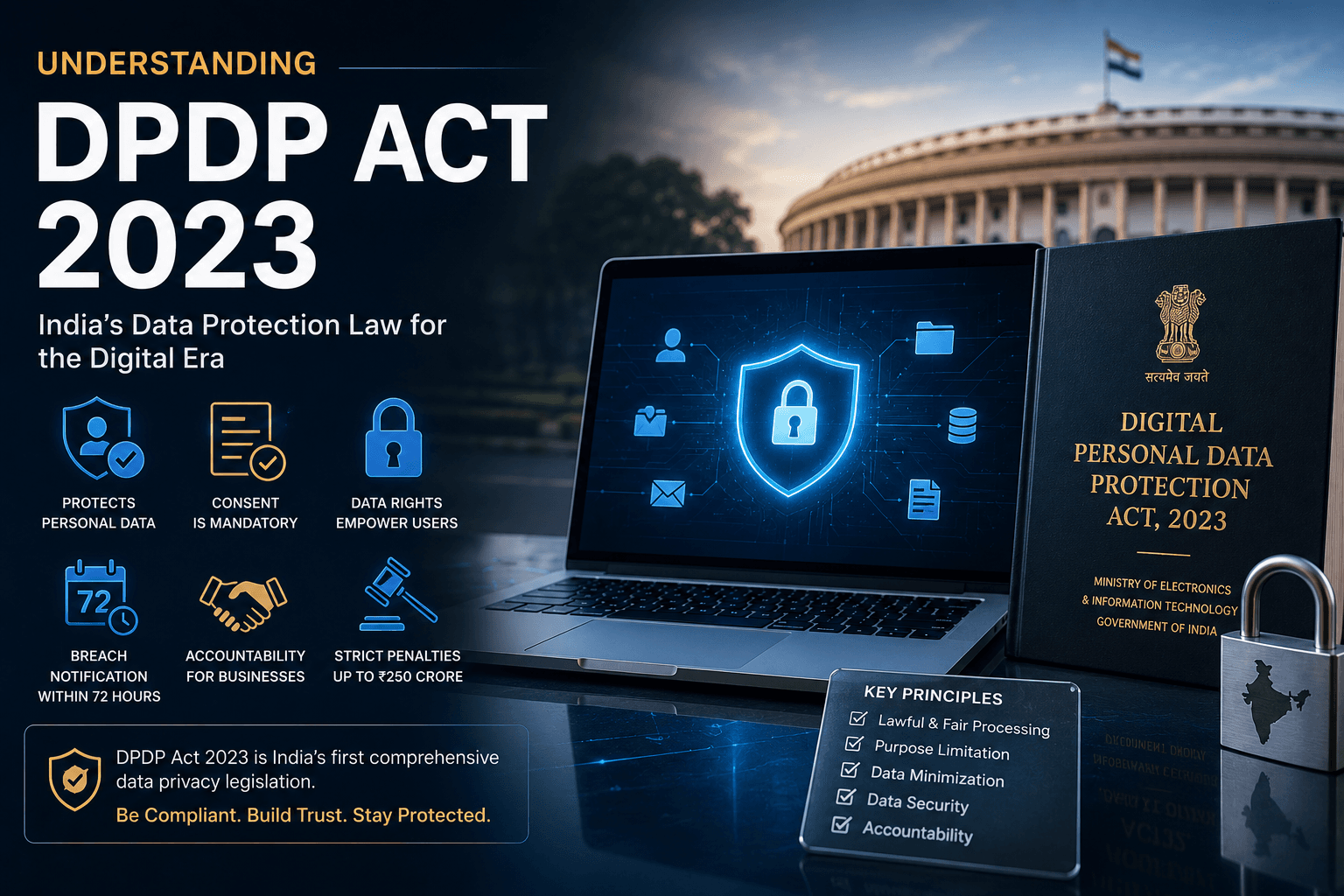
The Digital Personal Data Protection (DPDP) Act 2023 is India's first comprehensive data privacy legislation. Effective from September 2024, it fundamentally changes how Indian companies collect, process, and store personal data. dpdp penalties explained
Under DPDP, personal data is any information that identifies or can identify an individual. This includes:
Obvious Identifiers:
Sensitive Identifiers (heightened protection):
Behavioral Data:
You must collect explicit, informed, written consent before collecting personal data. Consent cannot be a condition for service unless the data is necessary for that service. dpdp vs gdpr
What This Means:
Collect and process only the data you actually need. If you're building a newsletter signup, you don't need:
Once you collect data for a specific purpose, you cannot use it for something else without new consent.
Example: If you collect email for marketing, you can't later use it for credit assessment without asking again.
You cannot keep personal data indefinitely. Retention must be:
Users have a right to:
You must appoint a DPO (or outsource this role) if you:
If third parties process your data (cloud providers, email services, analytics platforms), you must have written agreements specifying:
If personal data is breached, you must notify:
Documentation is required for audit purposes.
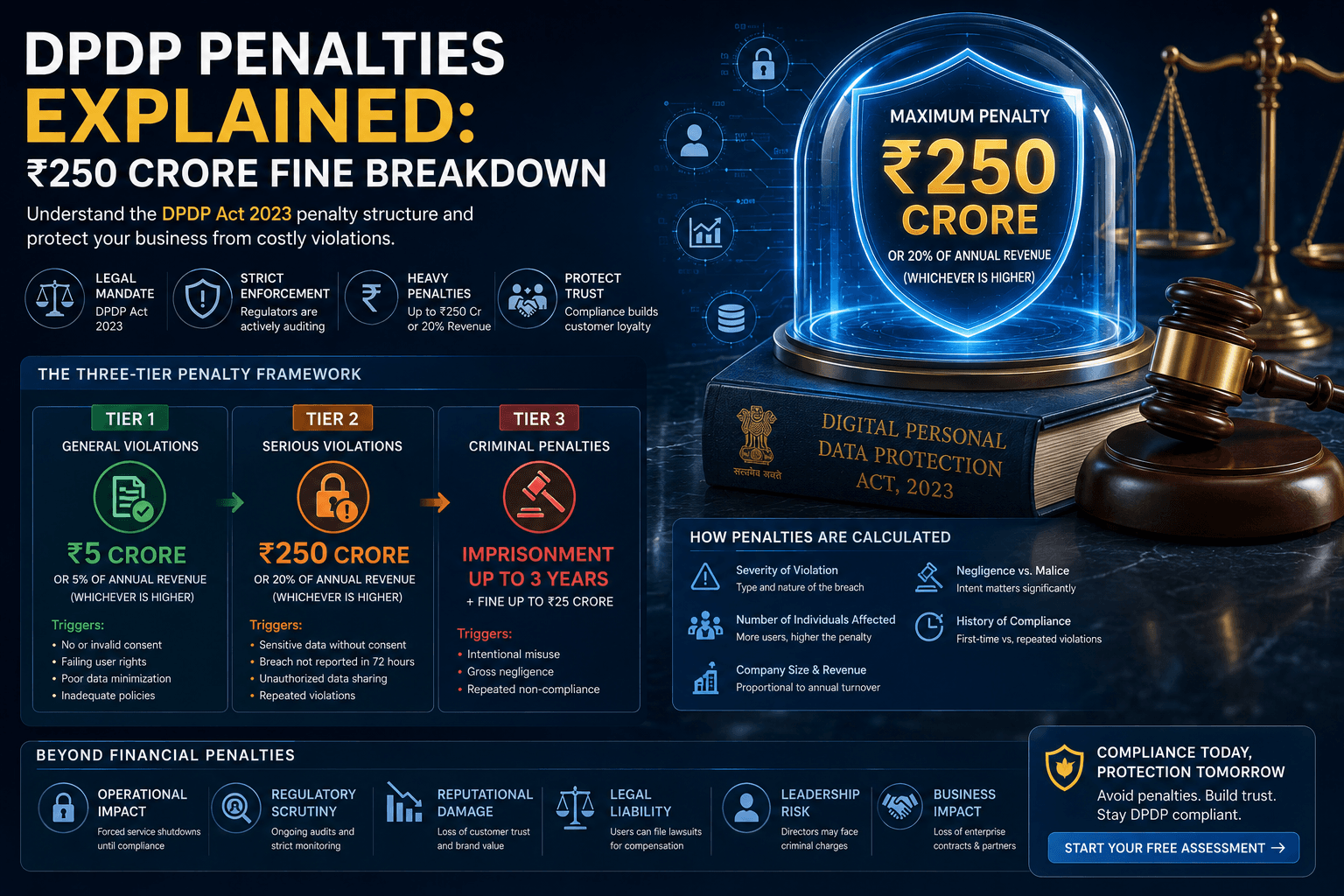
DPDP enforcement is strict:
| Violation | Penalty |
|---|---|
| General violations | Up to ₹5 crore or 5% of annual revenue (whichever is higher) |
| Serious violations | Up to ₹250 crore or 20% of annual revenue (whichever is higher) |
| Sensitive data mishandling | Up to ₹250 crore |
Criminal penalties (imprisonment) apply in cases involving repeated non-compliance, negligence, or intentional violations.
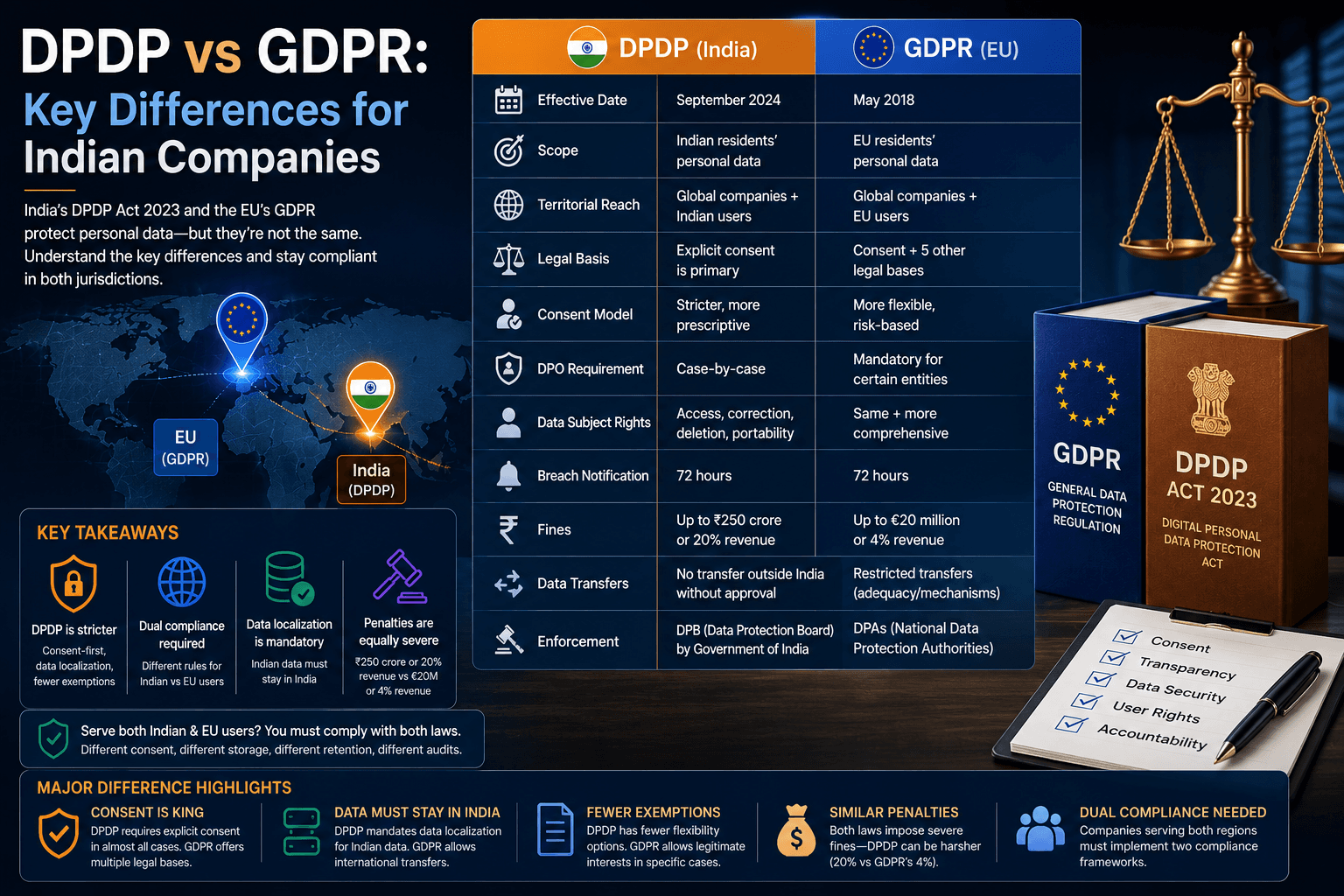
| Aspect | DPDP | GDPR |
|---|---|---|
| Geographic scope | Indian residents' data | EU residents' data |
| Consent | Explicit consent required | Consent + legal basis |
| Fines | Up to ₹250 Cr | Up to €20 million or 4% revenue |
| DPO | Required for specific cases | Required for public authorities & large processors |
| Data breach | 72-hour notification | 72-hour notification |
DPDP is simpler and more prescriptive than GDPR but equally binding for Indian companies.
DPDP is not a future concern—it's already active. Companies found non-compliant face massive fines, forced platform shutdowns, and criminal liability for leadership.
The time to prepare is now.
Disclaimer: This article is for general informational purposes only and does not constitute legal advice. Consult a qualified data protection lawyer for your specific situation.
Next Step: Start your free DPDP compliance assessment
Let's discuss how these insights apply to your specific challenges.
Get in Touch