DPDP Compliance
What is the DPDP Act 2023? Complete Guide for Indian Companies
15 min read
If your company handles EU residents' data, you're already familiar with GDPR. Now India has DPDP. Are they the same? How do they differ? what is dpdp act 2023
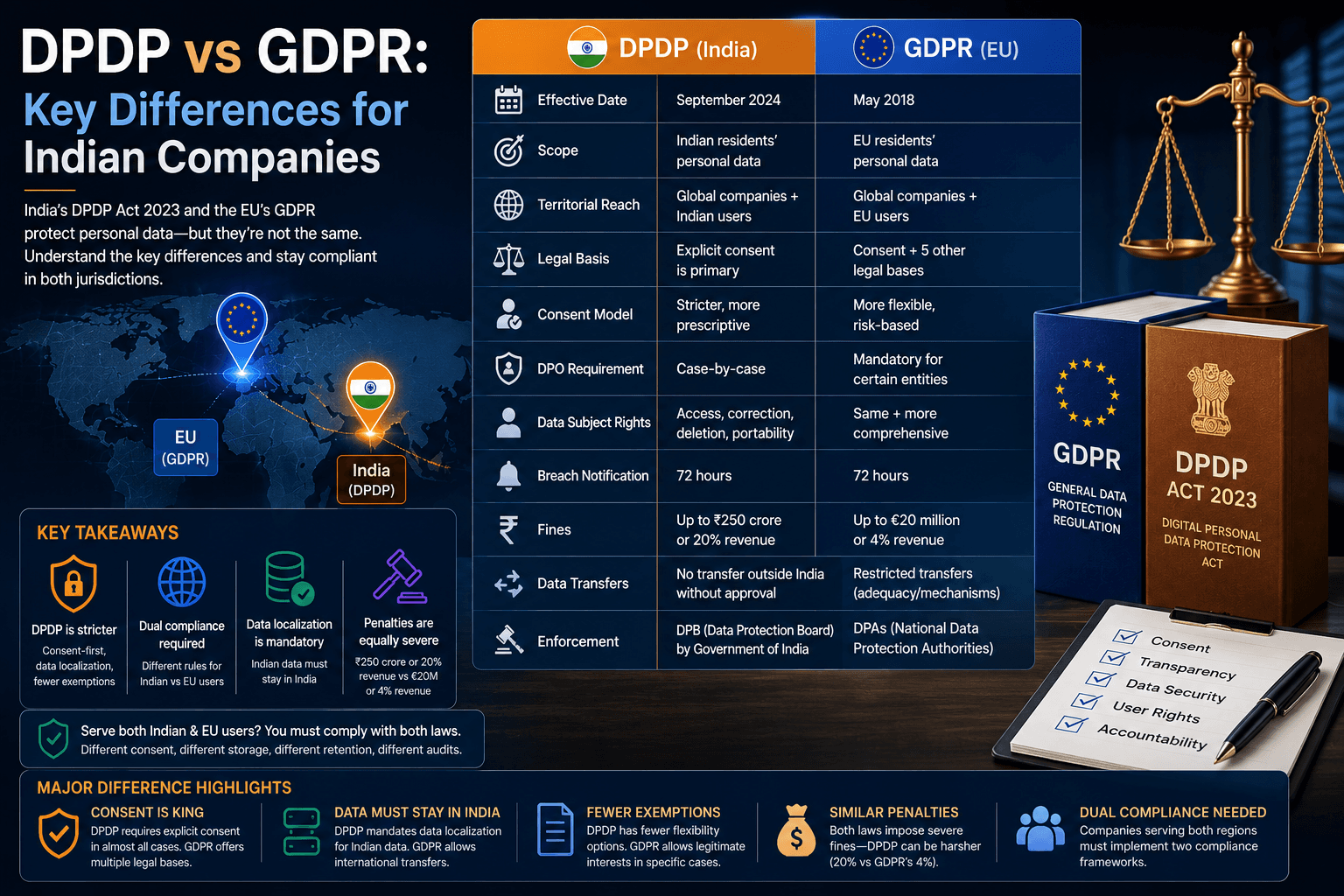
| Aspect | DPDP (India) | GDPR (EU) |
|---|---|---|
| Effective Date | September 2024 | May 2018 |
| Scope | Indian residents' personal data | EU residents' personal data |
| Territorial Reach | Global companies + Indian users | Global companies + EU users |
| Legal Basis | Explicit consent primary | Consent + 5 other legal bases |
| Consent Model | Stricter, more prescriptive | Flexible, risk-based |
| DPO Requirement | Case-by-case | Mandatory for certain entities |
| Data Subject Rights | Access, correction, deletion, portability | Same + more comprehensive |
| **Breach Notification | 72 hours | 72 hours |
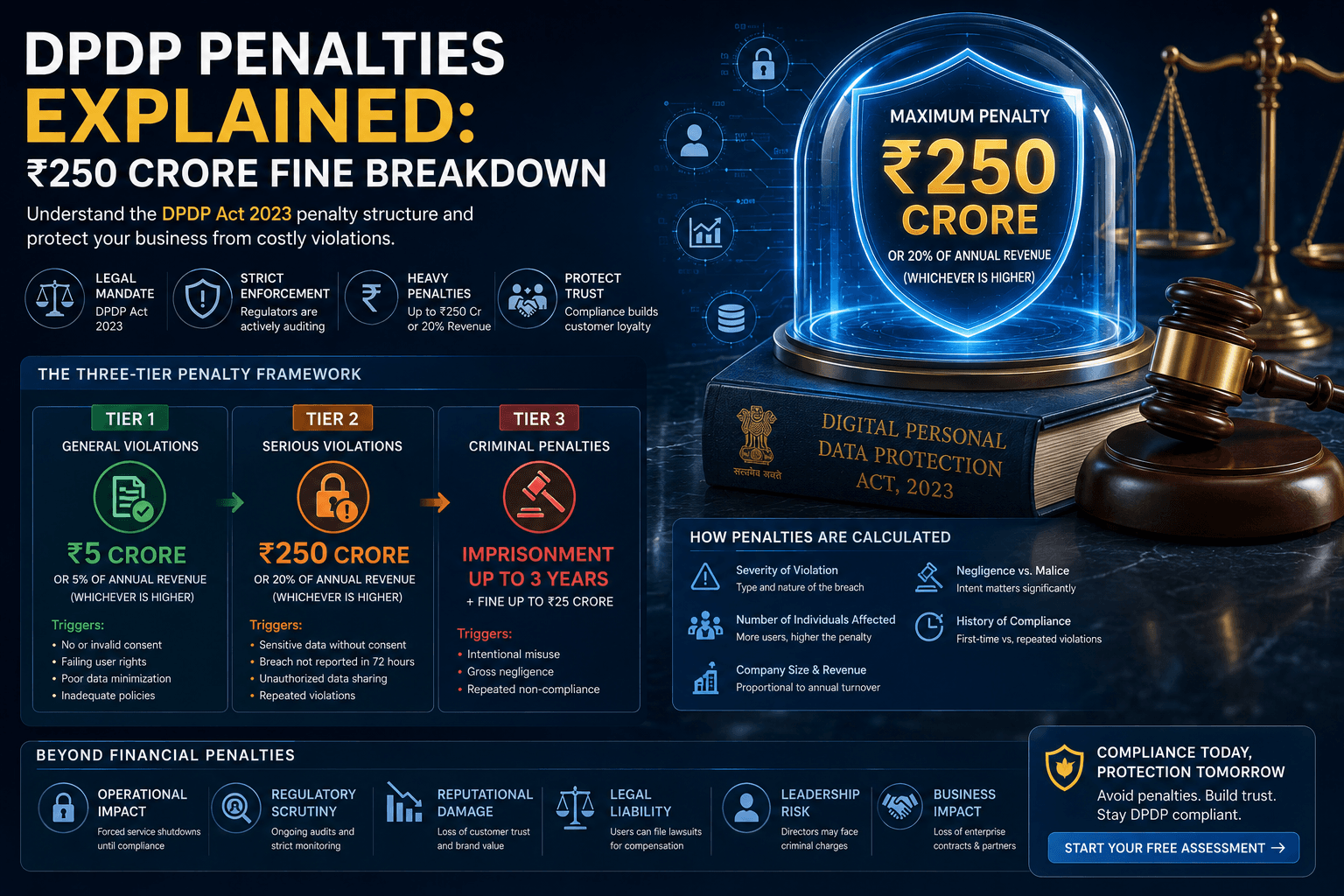
| Fines | ₹250 crore or 20% revenue | €20 million or 4% revenue |
| Data Transfers | No transfers outside India without approval | Restricted transfers (adequacy/mechanisms) |
| Enforcement | DPB (Data Protection Board) | DPAs (National regulators) |
DPDP:
GDPR:
Implication: DPDP is stricter. Indian companies have fewer alternatives to consent.
DPDP:
GDPR:
Implication: DPDP is more prescriptive. Define retention timelines in advance.
DPDP:
GDPR:
Implication: If you process health or biometric data, DPDP is stricter.
DPDP:
GDPR:
Implication: If you use US cloud providers (AWS, Azure, Google Cloud), you may need India-specific data silos for Indian user data.
DPDP:
GDPR:
Implication: Many Indian companies will need a DPO or DPO-as-a-Service. GDPR is more restrictive about who needs one.
DPDP:
GDPR:
Implication: DPDP enforcement is centralized and potentially less complex, but fines are comparable in scale.
DPDP:
GDPR:
Implication: Both require transparency in AI-driven decisions; GDPR is slightly stricter.
If you serve both regions, you must comply with both laws simultaneously. This means:
Dual Compliance:
Data Localization:
Consent Management:
Resource Impact:
DPDP is generally stricter because:
However, GDPR's enforcement track record (larger fines issued to companies like Meta, Google) shows its teeth.
Audit Data Flows
Segregate Data by Geography
Implement Dual Consent
Update Data Retention Policies
Appoint a DPO
Disclaimer: This article is for general informational purposes only and does not constitute legal advice.
Get Compliant: Start your free DPDP compliance assessment
Let's discuss how these insights apply to your specific challenges.
Get in Touch