Logistics & AI
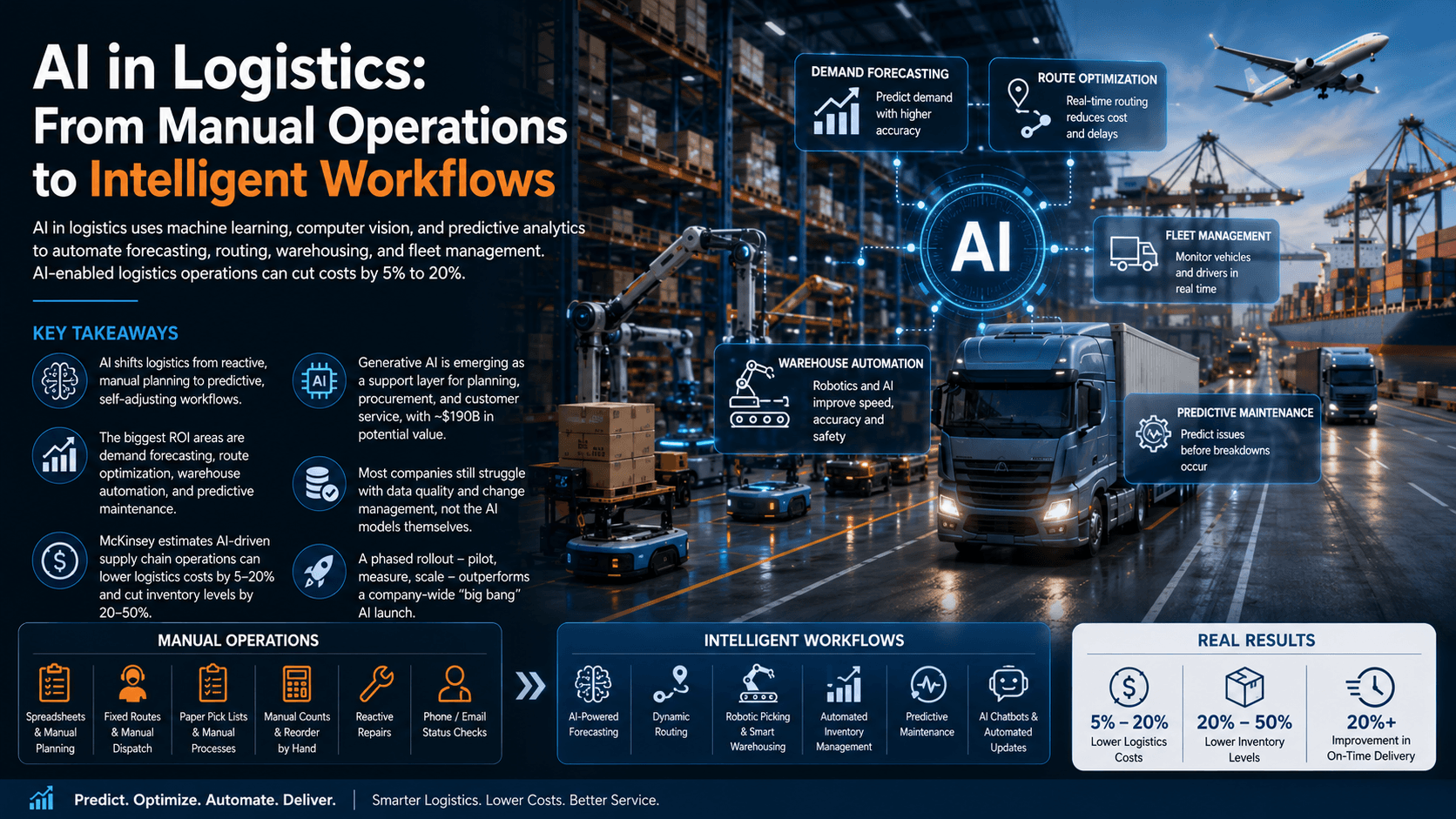
AI-Powered Delivery Systems That Reduce Operational Costs
15 min read

Logistics margins are thin. Every percentage point matters. Yet most logistics companies are still optimizing routes manually, forecasting demand with spreadsheets, and managing warehouses with outdated systems. dpdp penalties explained
AI changes that. Three targeted AI applications can cut costs 20-30% while improving service metrics across the board.
The Problem: Manual route planning is guesswork. You're not considering real-time traffic, weather, vehicle capacity, delivery windows, driver skill, and a dozen other variables simultaneously.
Result: Drivers take inefficient routes. Fuel costs are 15-20% higher than optimal.
How AI Solves It: Machine learning models that consider:
The Result:
The Problem: You forecast with historical data and spreadsheets. You miss seasonal spikes. You overstock in slow periods. You're caught off-guard during peak season.
Result: Inventory is misaligned with actual demand. Warehousing costs are 18-25% higher than necessary.
How AI Solves It: ML models trained on:
Models update continuously. They learn from every order.
The Result:
The Problem: Picking routes are inefficient. Inventory counting is manual and error-prone. Packing is slow. Returns handling is chaotic. ai powered delivery systems
Result: Warehouse productivity is 40-50% lower than best-in-class operations.
How AI Solves It:
The Result:
Phase 1 (Weeks 1-4): Route Optimization
Phase 2 (Weeks 5-12): Demand Forecasting
Phase 3 (Weeks 13-20): Warehouse Optimization
Companies implementing all three typically see:
Cost Reduction:
Service Improvement:
Operational Agility:
Start with your biggest pain point. For most logistics companies, that's route optimization. You'll see results in 90 days and fund the next phases.
Ready to cut costs without cutting service? Let's discuss which optimization would have the biggest impact on your operation.
Let's discuss how these insights apply to your specific challenges.
Get in Touch